
Middle East crisis sends energy markets soaring – and strengthens the case for UK Renewables

The rapidly escalating conflict in Iran and across the wider Middle East is sending shockwaves through global energy markets, creating one of the most disruptive supply crises in recent memory. Over the past week, coordinated US–Israeli airstrikes and Iran’s retaliatory missile and drone attacks have severely strained the region’s oil and gas infrastructure.
Tanker traffic through the Strait of Hormuz, the narrow shipping route responsible for roughly 20% of the world’s oil and gas flows, has fallen by more than 80%, with around 150 vessels stranded in Gulf waters as shipowners avoid the growing threat of attack. Qatar, one of the world’s largest LNG producers, was also forced to halt production at several facilities following drone strikes.
The market reaction has been swift. Brent crude has surged by between 8% and 13% within days, while European gas prices have recorded jumps of 38% to nearly 50% in response to the disruption. Analysts warn that if hostilities persist, oil could approach $100 a barrel, a scenario increasingly reflected in global trading sentiment.
For the UK, the implications are significant despite our limited direct reliance on Iranian imports. Britain’s energy bills are tied to global wholesale markets, meaning any shock to international supply routes is felt domestically. As fears surrounding shipping safety intensified, the UK’s benchmark gas price leapt by more than 50% in a single day. Experts note there is currently no immediate threat to UK supply, but prolonged turbulence could push up future electricity and heating costs.
This volatility is prompting urgent discussions about resilience, and shining a spotlight on renewables. Unlike fossil fuels, which are vulnerable to geopolitical tensions and shipping disruption, renewable energy offers local, stable generation insulated from international crises. Battery storage systems, commercial solar installations and on‑site generation provide predictable long‑term pricing at a time when the wider market is anything but predictable.
Energy researchers have already reported a clear shift – many of the UK’s largest industrial energy users are planning to self‑generate a significant share of their own electricity within the next few years to reduce exposure to global shocks. Farmers and landowners, who face rising fuel, grain‑drying and refrigeration costs, are increasingly adopting solar as a steady income stream and protection against price spikes.
As the Middle East crisis continues, one message is becoming clearer: countries that rely heavily on imported fossil fuels remain exposed to geopolitical risk. Those investing in home‑grown renewable energy will weather the storm far more effectively.
East Green Energy, a family‑run Suffolk‑based renewable specialist, works with homeowners, farms, estates and businesses to build exactly this kind of long‑term resilience.
If you’re concerned about rising prices or want to explore solar or battery options for your property, visit eastgreenenergy.co.uk or speak to their team about generating your own stable, home‑grown power and reducing your reliance on volatile global markets.
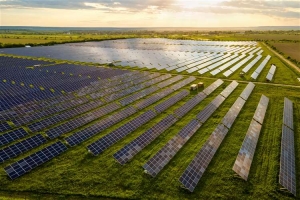
Plans to build a 75,000-panel solar farm near a village have been given the go-ahead by councillors.
OPDE UK Limited's plans to build the 39-hectare site at Valley Farm, south of Hessett, near Bury St Edmunds, were approved during a meeting of Mid Suffolk's planning committee earlier today.
The solar farm, made up of around 75,000 solar panels, will have a 42-megawatt capacity, enough electricity to power 9,660 homes.
Other infrastructure, including two substations, a control room, converters and transformers, was part of the plans.
But the proposals attracted some concerns from local parish councillors, including in Hessett, Drinkstone, Gedding, Bradfield St George, and Great and Little Whelnetham.
Nine objections were also submitted from residents.
Their concerns included the solar farm's impact on the landscape, road network and the loss of agricultural land.
Gerard Artindale, a resident, told councillors the traffic assessment carried out as part of the plans was 'nonsense' and warned road damage would be enormous.
Suffolk County Council's highways team said the plans were acceptable, subject to conditions being added.
On the landscape issues, officers accepted there would be some harm, but concluded it could be mitigated.
Simon Betts, the agent, stressed the solar farm would save 1.5 million tonnes of CO2 over its 40 years of operation, at which point it would be returned to agricultural use.
In the meantime, however, 31 hectares of best-quality land would be taken out of use for food production, which several councillors were concerned about.