

Site Owner

Millions of households and businesses will continue benefitting from homegrown, clean power as the government backs a 20-year lifetime extension of Sizewell B nuclear power station, supporting 900 skilled jobs as part of a new ‘golden age’ of nuclear.
Consumers are set to benefit for decades to come, as the extended operation will reduce the costs of Britain’s energy system compared to building alternative generation, protecting billpayers and strengthening our energy security.
Currently, Sizewell B provides approximately 3% of the UK’s total electricity needs. The extension of the plant will maintain a vital source of energy for Britain, powering 2.5 million homes and protecting billpayers from exposure to volatile fossil fuel markets through secure, reliable, clean power.
Alongside the extension of Sizewell B, the government is continuing to back nuclear projects across the UK, including Britain’s first small modular reactors in Anglesey, and the construction of Sizewell C, set to produce clean power for the equivalent of 6 million homes and support 17,000 jobs at peak construction.
Energy Secretary Ed Miliband said:
Nuclear power is vital for our energy security, and this extension will help produce the clean power our country needs.
Chancellor of the Exchequer, Rachel Reeves, said:
Sizewell B is a vital part of Britain’s energy future, and this agreement secures clean, homegrown power for millions of homes until 2055
It is also a real vote of confidence in the hundreds of skilled workers in Suffolk who will power Britain’s clean energy future, delivering the long-term certainty that businesses and workers need.
Minister for Science, Innovation, Research and Nuclear Lord Vallance said:
This deal protects billpayers and boosts the country’s energy security by continuing to provide clean, secure power for millions of households.
By backing Sizewell B, we are delivering a golden age of nuclear and maintaining 900 skilled jobs in Suffolk.
The government and EDF have agreed terms for a 20-year Contract for Difference at £70.50 per megawatt hour in 2025 prices starting from 2035, the original closure date, with support and investment from Centrica.
Skilled workers in nuclear will be retained through the continued operation of Sizewell B, helping to sustain Britain’s expertise and strengthening homegrown supply chains. The Nuclear Industry Association estimates that nearly 100,000 people are employed in nuclear jobs across the country.
New estimates suggest that had Sizewell B been operating under this agreement during the energy price crisis following Russia’s invasion of Ukraine, consumers would have saved around £2 billion.
Simone Rossi, CEO of EDF UK, said:
Global events demonstrate time and again how vital it is for the UK to secure long term, low-carbon, homegrown electricity which protects British households and businesses from market volatility. Extending the life of the plants we already have alongside building new ones is central to EDF’s strategy.
Chris O’Shea, Chief Executive of Centrica said:
I’m delighted that Sizewell B, in which Centrica owns a 20% share, will continue to play a key role in the UK’s energy system for decades to come. Generating around 3% of the UK’s electricity, Sizewell B is critical to delivering the reliable, zero-carbon baseload power that supports Britain’s energy security, protects skilled jobs and underpins a more resilient economy. We welcome the constructive engagement with government in reaching this agreement, providing the certainty needed to support the required investment.
Ipswich are back in the Premier League. And in what style. Folk in this part of Suffolk have become accustomed to promotion parties under Kieran McKenna and the latest certainly did not disappoint. Two early goals dismissed any fears of shredded nerves to ensure an afternoon of revelry could commence.
By the time a late third was added, the pitch perimeter was already lined with elated spectators ready to engulf their idols at the final whistle. No police presence was ever going to be sufficient to stop their invasion.
The post-match celebrations had it all: sprayed champagne, players’ children scoring on the pitch and selfies with the Ipswich minority stakeholder Ed Sheeran. Happy days, indeed.
“It’s probably been the hardest one,” said McKenna, of his third promotion in four full seasons at the Ipswich helm. “I know how hard we’ve had to work to turn it around. As a club, we had such a climb and a steep fall. We’ve had to rebuild this team under difficult circumstances and we deserve to be where we are today.”
It had not been the simple season many anticipated for a team widely expected to make an immediate return to the top flight after last year’s relegation. Given the swashbuckling style of their last ascent and their installation as title favourites this time around, there was a sense Ipswich had largely underperformed in a campaign that often flickered, but never really caught light.
“We started slow, which can happen, but we have steadily improved over the course of the year,” said McKenna. “It’s about how you finish.”
There was nothing underwhelming about their performance when it truly mattered. The manner in which they swiftly settled this promotion decider was as exhilarating as anything they had produced all season, laying siege on the Queens Park Rangers goal from the first whistle. It was a barrage as devastating as it was sublime and early goals from George Hirst and Jaden Philogene were no more than they deserved.
Job complete with a total absence of fuss, the remainder of the match could pass largely without incident before Kasey McAteer added a late third. No need for Ipswich to worry about any permutations that might have given Millwall or Middlesbrough designs on snatching the Championship’s second automatic promotion spot.
The feverish atmosphere had been evident around the stadium all morning, with flags flying and supporters singing themselves hoarse long before the players emerged on to the playing field. Tens of thousands had filled the streets with a fog of blue flares to greet the arrival of the players’ coach.
Ipswich burst out of the traps, pummelling their hapless opponents with wave after wave of blistering attack. Leif Davis’s belting low cross induced panic for the opener, allowing Hirst to tap in from barely a yard. Six minutes later, a wonderfully slick one-touch move culminated in Hirst playing in Philogene, who had time to settle himself and slot into the corner from eight yards.
QPR improved – it would have been impossible not to – as a content Ipswich eased off, and the visitors fired six unanswered shots at the end of the first half. But even then the best chances fell to the hosts, Philogene going close with a wonderful volley soon after half-time and Dara O’Shea heading inches past the upright, before McAteer tapped in a loose ball with five minutes remaining for Ipswich’s third.
“This year, everyone wanted us to fail but we’ve done it,” said Hirst. “It’s been difficult, we’ve made it hard for ourselves, but who cares, we’re back in the Premier League and that’s all that matters.”
Attention will soon turn to ensuring Ipswich’s next top-flight stay is not as brief as the last. Such concerns can wait, for now. This bank holiday weekend is for celebrating.

Sizewell C is set to host its first-ever Women in Construction jobs fair – with the aim of attracting a new generation of women into construction, engineering, and STEM careers.
The event will bring together a large number of employers and inspiring women associated with the Sizewell C project to inspire confidence, challenge outdated perceptions, and open doors to real opportunities in the nuclear sector.
Held at the Sizewell Sports and Social Club in Leiston on 15 April, the fair will showcase the wide range of opportunities at Sizewell C and across the industry.
Whether ladies considering returning to work, looking to grow their careers, or just starting out, there are a wide variety of opportunities available – from hands-on site-based delivery positions to engineering, planning, commercial roles, STEM opportunities, and supporting roles such as administration, catering, or driving.
Hayley Critchley, Head of Site Compliance at Sizewell C, and Chair of the Women in Construction Community Group, said: “We established the Sizewell C Women in Construction Community in summer 2025 to celebrate and support women working across our fabulous project – and this is our first-ever jobs fair to inspire more women to join us.
“Construction has long been shaped by outdated stereotypes, and we want to challenge those perceptions by showcasing the real opportunities available to women. With the strong backing of our supply chain, we want this careers event to show that construction is an industry where women can thrive.”
The fair is part of Sizewell C’s commitment to building a diverse workforce and supporting greater gender balance across the construction and infrastructure sectors. With thousands of roles being created during construction of the power station on the Suffolk coast, the project aims to ensure women are well represented and supported at every level.
Sizewell C’s leadership team already has 63% female representation, and its apprenticeship programme – launched in 2021 – aims to be 50% female.
Nicky Paine, Social Impact Manager at the Civil Works Alliance, a partnership between Sizewell C and three leading construction companies, said: “The Civil Works Alliance and our supply chain partners fully support Sizewell C’s commitment to encourage women to join the project and we are actively engaging with local communities to highlight the wide range of fulfilling and sustainable careers available. Our recent partnership with Women in Construction Anglia and the development of a new Ambassador Programme will also enable us to build a strong pipeline of female talent for the future.
“We want all women to know that their skills, ambition and ideas are exactly what our industry needs – and that they will play a vital role in strengthening and shaping its future.”
Around 35 contractors currently working on the project will be exhibiting at the fair, including the Civil Works Alliance and Essex-based Blackwell Earthmoving.
Samantha McMullan, Administrator and Personal Assistant at Blackwell Earthmoving, said: “My own path into the construction industry has not been a straight road. I was previously a homemaker – fitting in part-time jobs while my children grew up. Jobs varied from shop work to housekeeping.
“I also worked in admin at a wholesale pharmaceutical company, and while I loved it, I wanted something bigger. My ‘bigger’ turned out to be at Sizewell C – working as a PA for one of their major contractors, Blackwell Earthmoving.
“All the skills that I’d picked up in my various jobs have helped me to get where I am now. It shows that wibbly wobbly roads into construction are great. If I can do it, so can you.”
The Women in Construction Careers Fair, which runs from 10:30 to 19:30, is free to attend and open to anyone interested in an exciting opportunity in construction – from those looking for a career change to those wanting to develop new skills.
At peak construction, almost 8,000 people will work at Sizewell C. Once operational, the power station will generate 3.2GW of low-carbon electricity – enough to power six million homes – and will reduce UK carbon emissions by around nine million tonnes each year. The project will also create at least 1,500 apprenticeships, with around a third reserved for local people in Suffolk.
Last year, Sizewell C’s careers fairs in Leiston, Lowestoft, and Ipswich welcomed more than 1,500 people. Details of further fairs will be revealed in the coming months.
Middle East crisis sends energy markets soaring – and strengthens the case for UK Renewables

The rapidly escalating conflict in Iran and across the wider Middle East is sending shockwaves through global energy markets, creating one of the most disruptive supply crises in recent memory. Over the past week, coordinated US–Israeli airstrikes and Iran’s retaliatory missile and drone attacks have severely strained the region’s oil and gas infrastructure.
Tanker traffic through the Strait of Hormuz, the narrow shipping route responsible for roughly 20% of the world’s oil and gas flows, has fallen by more than 80%, with around 150 vessels stranded in Gulf waters as shipowners avoid the growing threat of attack. Qatar, one of the world’s largest LNG producers, was also forced to halt production at several facilities following drone strikes.
The market reaction has been swift. Brent crude has surged by between 8% and 13% within days, while European gas prices have recorded jumps of 38% to nearly 50% in response to the disruption. Analysts warn that if hostilities persist, oil could approach $100 a barrel, a scenario increasingly reflected in global trading sentiment.
For the UK, the implications are significant despite our limited direct reliance on Iranian imports. Britain’s energy bills are tied to global wholesale markets, meaning any shock to international supply routes is felt domestically. As fears surrounding shipping safety intensified, the UK’s benchmark gas price leapt by more than 50% in a single day. Experts note there is currently no immediate threat to UK supply, but prolonged turbulence could push up future electricity and heating costs.
This volatility is prompting urgent discussions about resilience, and shining a spotlight on renewables. Unlike fossil fuels, which are vulnerable to geopolitical tensions and shipping disruption, renewable energy offers local, stable generation insulated from international crises. Battery storage systems, commercial solar installations and on‑site generation provide predictable long‑term pricing at a time when the wider market is anything but predictable.
Energy researchers have already reported a clear shift – many of the UK’s largest industrial energy users are planning to self‑generate a significant share of their own electricity within the next few years to reduce exposure to global shocks. Farmers and landowners, who face rising fuel, grain‑drying and refrigeration costs, are increasingly adopting solar as a steady income stream and protection against price spikes.
As the Middle East crisis continues, one message is becoming clearer: countries that rely heavily on imported fossil fuels remain exposed to geopolitical risk. Those investing in home‑grown renewable energy will weather the storm far more effectively.
East Green Energy, a family‑run Suffolk‑based renewable specialist, works with homeowners, farms, estates and businesses to build exactly this kind of long‑term resilience.
If you’re concerned about rising prices or want to explore solar or battery options for your property, visit eastgreenenergy.co.uk or speak to their team about generating your own stable, home‑grown power and reducing your reliance on volatile global markets.
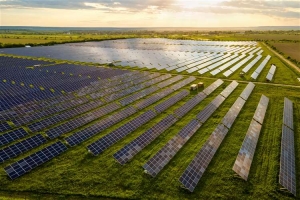
Plans to build a 75,000-panel solar farm near a village have been given the go-ahead by councillors.
OPDE UK Limited's plans to build the 39-hectare site at Valley Farm, south of Hessett, near Bury St Edmunds, were approved during a meeting of Mid Suffolk's planning committee earlier today.
The solar farm, made up of around 75,000 solar panels, will have a 42-megawatt capacity, enough electricity to power 9,660 homes.
Other infrastructure, including two substations, a control room, converters and transformers, was part of the plans.
But the proposals attracted some concerns from local parish councillors, including in Hessett, Drinkstone, Gedding, Bradfield St George, and Great and Little Whelnetham.
Nine objections were also submitted from residents.
Their concerns included the solar farm's impact on the landscape, road network and the loss of agricultural land.
Gerard Artindale, a resident, told councillors the traffic assessment carried out as part of the plans was 'nonsense' and warned road damage would be enormous.
Suffolk County Council's highways team said the plans were acceptable, subject to conditions being added.
On the landscape issues, officers accepted there would be some harm, but concluded it could be mitigated.
Simon Betts, the agent, stressed the solar farm would save 1.5 million tonnes of CO2 over its 40 years of operation, at which point it would be returned to agricultural use.
In the meantime, however, 31 hectares of best-quality land would be taken out of use for food production, which several councillors were concerned about.
County Hall has remained empty since Suffolk County Council moved out of the site in 2004
A historic building that has been empty for 22 years could be converted into a new hotel as well as a museum, its new owner has said.
Ipswich County Hall is a Grade II listed site where the divorce of Wallis Simpson was granted in 1936 before her marriage to the then King Edward VIII.
Dr Sachin Karale, a local property investor, recently bought the site on St Helen's Street, which came with planning permission to convert it into 40 flats.
But he said from the moment he first stepped inside, he knew he did not want to see it turned into flats.
Dr Sachin Karale smiles at the camera while standing inside County Hall. He has dark, short hair and wears a navy blue suit and a white shirt and red talk.
Property investor Dr Sachin Karale said the history of the building should be preserved
An aerial shot of County Hall in Ipswich, featuring a side shot of the building showing a smashed clock
Im,
A clock on the side of the building has been smashed
"The planning at the moment from the council is to make 40 flats," he said.
"My main strategy [normally] is to convert offices into flats, but this is such a beautiful building I can't see it get converted into flats.
"When I walked in first, I thought this is enormous. This should be used as function rooms, hotel rooms, and it will be beautiful.
"I would also like to make it partly into a museum, so people can come and visit and know the history of the place."
Two staircases side by side inside the building
The building was also previously used as a prison and a law court
A large 13-panelled window with different stain-glass colour crests on the panes.
The building became home to Suffolk County Council after the local authority's formation in 1974
The main structure of the former County Hall dates back to the start of the 20th Century, although some parts date back to 1837, and one small section to 1786.
It originally served as a prison and law court before later becoming a council building from 1906.
It was designed by William McIntosh Brooks, who wanted its appearance to reflect the justice administered within.
The building became home to Suffolk County Council after its formation in 1974.
In 2004, the council moved into Endeavour House on Russell Road, and County Hall has remained vacant ever since.
More recently it had been put up for auction before Karale later bought the site.
Part of the inside of County Hall, which is in need of refurbishment. The photo shows a large open stairwell with wooden panels throughout the room that need replacing.
The inside of the building needs refurbishment
A selection of doors left abandoned inside the building
A selection of doors has been left stacked up inside the building
Karale told the BBC he believed the project would cost up to £9m, and over the next few months he would finalise his plans before going to Ipswich Borough Council for approval.
He said he felt the building was of "national importance" and that it could encourage people to visit Ipswich, especially with the Regent Theatre nearby.
"The Regent Theatre has spent £3m recently and it has become so beautiful," he said.
"It would be really nice for those people to come and have a [hotel] room experience here [as well]."
Unemployment in the UK has risen to its highest level in nearly five years, according to the latest figures from the Office for National Statistics (ONS).
The unemployment rate increased to 5.2% in the three months to December 2025, up from 5.1% in the previous period.
Young People Hit Hardest
Young people are bearing the brunt of the slowdown. Unemployment among those aged 16 to 24 climbed to 16.1%, marking its highest level in more than a decade.
The data reflects weak hiring activity across the economy. At the same time, more people who were previously out of work are now actively seeking employment. The number of vacancies has remained broadly stable since mid-2025, meaning there are now more unemployed people competing for each available role — reaching a new post-pandemic high. Redundancies are also trending upward.
Wages Still Rising — But Growth Slowing
For those in work, wages continue to rise faster than inflation, but pay growth is losing momentum.
Average wage growth slowed to 4.2%
Public sector pay rose by 7.2%
After adjusting for inflation, real pay growth stood at just 0.8%
Current UK inflation is 3.4%
The Bank of England, which sets interest rates to control inflation, may have room for further rate cuts as wage pressures ease, according to economists.
Political Debate Intensifies
Businesses have pointed to policy measures introduced in Chancellor Rachel Reeves’ recent Budgets — including higher employer National Insurance contributions and an increase in the minimum wage — as factors increasing operating costs and slowing recruitment.
Work and Pensions Secretary Pat McFadden acknowledged that “more needs to be done to get people into jobs,” with tackling youth unemployment a stated government priority. He said Labour is working to make apprenticeships more accessible to young people.
However, the Conservatives have sharply criticised the government’s record. Shadow Work and Pensions Secretary Helen Whately described the rise in unemployment as the “predictable result of bad decisions,” arguing that higher employment costs are making it harder for school leavers and graduates to secure entry-level roles.
Former Health Secretary Alan Milburn warned that young people risk being placed on a “downward escalator” of poor health, limited education opportunities, and long-term reliance on benefits.
Graduates Facing Tough Job Market
Recent graduates are already feeling the impact.
Lucy Gabb, who graduated from University of Cambridge in July 2025 with a degree in French, has applied for more than 50 publishing roles while working in a London café. She has secured only one face-to-face interview.
She describes the experience as “soul-destroying,” noting that entry-level jobs are increasingly competitive and often require experience that students struggle to gain while studying.
AI Investment Raises Long-Term Concerns
Some analysts are also monitoring the rapid growth in artificial intelligence investment. While AI may improve productivity in the short term, there are concerns it could reduce entry-level opportunities over time — particularly affecting young jobseekers trying to gain their first experience.
However, easing inflation and the prospect of falling interest rates could help rebuild business confidence and support renewed economic growth in the months ahead.
Additional reporting by Hannah Mullane.

One of Ipswich’s most recognisable pubs, thanks to its prominent position opposite the town’s railway station, has been put up to let.
The Station Hotel in Burrell Road is being marketed by Greene King, which is seeking a new operator to take on the historic pub, which dates back to the 1860s.
Situated directly across from Ipswich train station, the pub benefits from high footfall from commuters, visitors to the town and football supporters travelling to Portman Road with it being the dedicated away fan pub.
According to the listing, the pub is available on a standard five-year tenancy agreement, with an estimated weekly rent of £683.
The Station Hotel (Image: Newsquest)
Greene King forecasts an annual turnover of more than £500,000 for the business, highlighting its strong trading potential.
The Station Hotel includes a large internal trading area with flexible seating, allowing the space to be adapted for different styles of operation.
There is also a commercial kitchen, offering scope for a food-led business.
Externally, the property benefits from a garden, car park and electric vehicle charging points.
A purpose-built outdoor bar is also included, designed to help manage busy periods such as football matchdays and major events.
Greene King says the site would suit an experienced publican looking to run a high-volume, community-focused pub.
They said: “This opportunity suits a driven, hands-on operator who thrives in lively environments and enjoys the challenge of delivering great service even under pressure.
“The ideal person will feel confident managing large matchday crowds, leading a team at pace, and ensuring the pub remains safe, welcoming and well-organised at all times.
“Beyond football days, they will be commercially minded, customer-focused and committed to building repeat trade through excellent hospitality, a compelling food and drink offer and smart use of the pub’s flexible layout.”
By Tom Cann

A pump manufacturer which has its UK base in Suffolk has snapped up two related water sector businesses in Ipswich for an undisclosed sum.

A Suffolk-based company has been appointed as the primary supplier of personal protective equipment (PPE) for the Sizewell C nuclear power station project, creating 23 new jobs in the county.
Suffolk Safety Solutions, based in Bacton near Stowmarket, will supply essential safety workwear to Sizewell C’s growing workforce over the next three years. The contract covers items including hard hats, high-visibility clothing and protective eyewear, supporting the project’s commitment to maintaining the highest standards of on-site safety.
The company is a joint venture between family-run PPE and workwear specialist Mathias & Sons Ltd and Suffolk-based portable accommodation provider Portable Space Ltd. The partnership builds on Mathias & Sons’ eight years of experience supplying the Hinkley Point C nuclear project, where a number of innovative safety solutions were developed and successfully trialled.
Those proven approaches will now be replicated at Sizewell C, with Portable Space providing complementary warehousing and logistics services. The newly created roles at Suffolk Safety Solutions will include warehouse operatives and delivery drivers, with further opportunities for apprenticeships also expected.
Jason Mathias, managing director of Mathias & Sons Ltd, said the contract marked a major milestone for the businesses involved.
“This represents a monumental achievement for our respective companies,” he said. “Through many years of collaboration and innovation at Hinkley Point C, we’ve gained a deep understanding of the unique demands of large-scale construction projects. We’ve used that learning to create a PPE model that embraces technology to enhance safety, wellbeing, efficiency and sustainability.”
Mark Dolman, managing director of Portable Space, said the partnership would deliver long-term benefits for the region.
“We’re excited to support these innovations at Sizewell C,” he said. “Our partnership with Mathias will create jobs and apprenticeships for local people in Suffolk and help drive long-term sustainable growth.”
The contract forms part of Sizewell C’s wider commitment to invest £2 billion in Suffolk businesses during the construction of the new power station, which is already under way on the county’s coast. To date, £581 million has been awarded to local suppliers.
At peak construction, Sizewell C is expected to support around 8,000 jobs, with approximately one-third filled by people from the local area.
Damian Leydon, site delivery director at Sizewell C, said safety and local economic impact were central to the project.
“Ensuring the highest standards of safety and protection for our workforce is our number one priority,” he said. “We’re pleased to partner with Mathias and Portable Space – two well-established UK companies – as we deliver this nationally significant project. This is also great news for local jobs and reinforces our commitment to supporting Suffolk businesses.”
The announcement follows a report published in December by global economic advisory firm Oxford Economics, which estimated that at the peak of construction Sizewell C could reduce local unemployment by between 1,700 and 2,200 people, potentially cutting Suffolk’s jobless rate from 2.7 per cent to as low as 1.7 per cent.